Portugal continues to position itself as one of Europe’s most attractive destinations for immigrants seeking long-term stability, employment opportunities, and retirement options. In recent years, the country has refined its immigration framework to focus more on structured residence, integration, and long-term contribution, rather than short-term mobility within the European Union.
A Shift Toward Long-Term Settlement
Portugal’s immigration system is built around the principle of legal residence. Foreign nationals who wish to live in the country must apply for the appropriate visa or residence permit based on their purpose—such as work, retirement income, investment, or family reunification.
According to official immigration guidance, non-EU citizens are required to meet key conditions such as valid documentation, sufficient financial means, and a clear legal purpose for staying in the country before obtaining residency authorization (Gov.pt).
This structure reflects Portugal’s broader goal: encouraging immigrants who are ready to live, work, and contribute locally, rather than treating residency as a simple gateway for free movement across Europe.
Work Opportunities for Foreign Nationals
Portugal continues to welcome foreign workers through multiple legal pathways. Once a residence permit is granted, immigrants generally gain the right to work in the country under equal conditions with Portuguese citizens.
Recent discussions around immigration reform also highlight a stronger focus on qualified labor and verified job offers, ensuring that migration is aligned with Portugal’s economic needs and workforce gaps (Government of Portugal).
This means that Portugal is not closing its doors to workers—rather, it is refining access to ensure that employment-based migration is structured, legal, and sustainable.
Retirement and Passive Income Options
Portugal is also widely known for its retirement-friendly visa routes, especially the D7 visa, which allows non-EU citizens with stable passive income—such as pensions, rental income, or investments—to obtain residency.
This visa does not require employment in Portugal. Instead, it is designed for individuals who can financially support themselves while residing in the country. Once approved, it grants legal residence rights, including the ability to live long-term in Portugal and access public services (Lisbon Property).
For many retirees, Portugal remains attractive due to its cost of living, healthcare system, safety, and quality of life.
Investment-Based Residency Options
Portugal also maintains a modified version of its Golden Visa program, now focused primarily on economic contribution rather than real estate acquisition.
Current eligible routes include investment funds, job creation, scientific research, and cultural support initiatives (imoaguiar.pt).
While real estate is no longer a direct qualifying investment, the program still allows investors to obtain residency while contributing to the Portuguese economy.
Not a Mobility Tool, But a Residency Framework
A key misunderstanding among some applicants is viewing Portuguese residency as a tool for unrestricted European mobility. In reality, Portugal’s immigration system is designed around legal residence status, which comes with rights and obligations inside the country.
Residency permits allow individuals to:
- Live in Portugal legally
- Work or start a business (depending on visa type)
- Access healthcare and public services
- Apply for permanent residency or citizenship over time
However, these rights are tied to actual residence and compliance with immigration rules, not just possession of a visa.
Conclusion
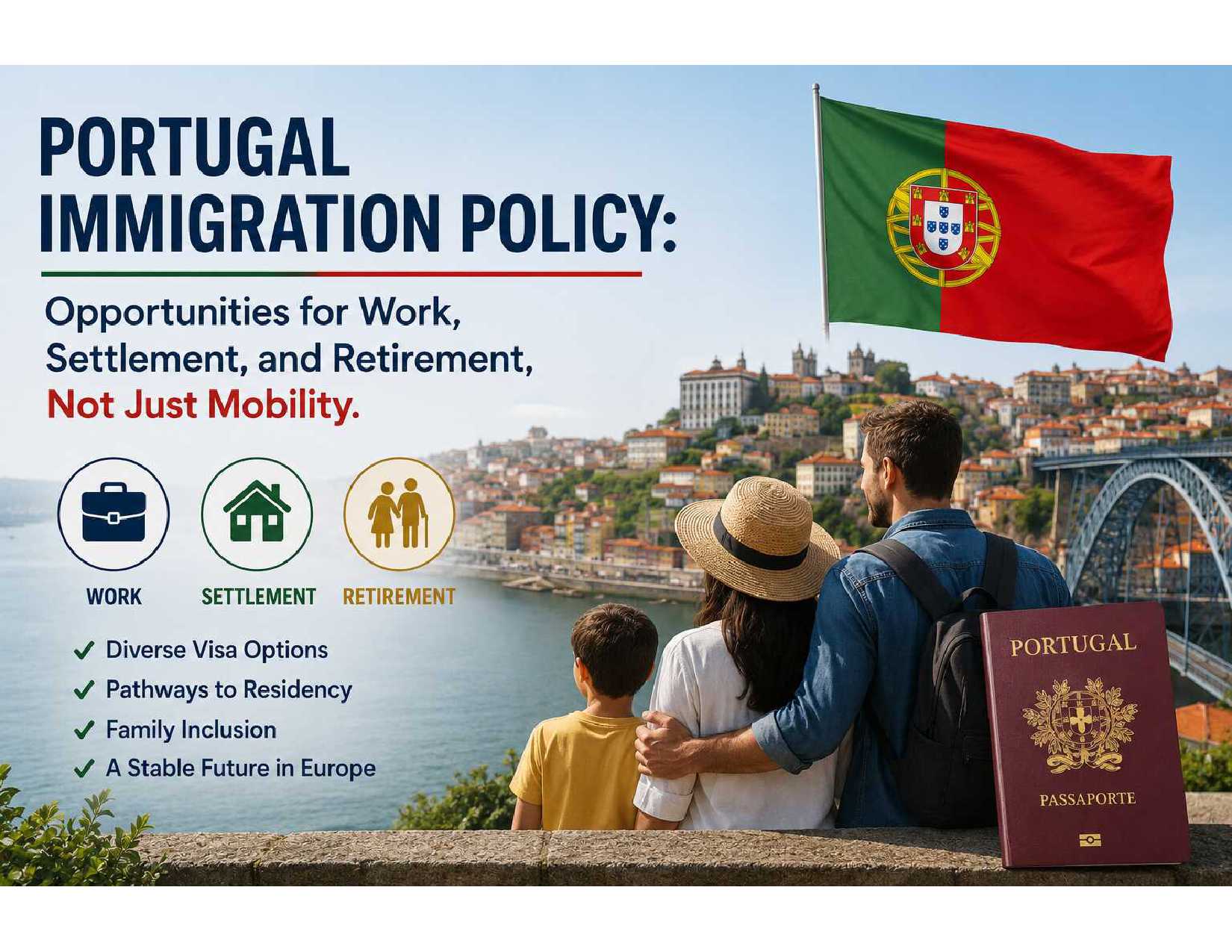
Portugal remains open to immigrants, but its approach is increasingly structured and regulation-driven. The focus is clear: attracting individuals who want to work, settle, or retire in Portugal long-term, rather than using residency solely as a stepping stone for mobility within Europe.
For those willing to integrate and meet legal requirements, Portugal continues to offer one of the most stable and attractive immigration pathways in the European Union.